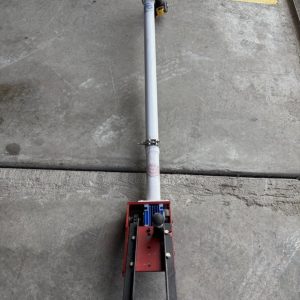
The Aircraft Electric Tow Bar – Mini Max Style provides convenient powered assistance for pilots, aircraft technicians, private owners, and aviation businesses that need dependable movement inside or around a hangar. An Aircraft Electric Tow Bar can reduce the physical effort associated with pushing or pulling an airplane while helping the operator maintain controlled movement in confined areas.
The available Electric Tow Bar for Aircraft combines used-equipment value with the convenience expected from compact powered ground-support equipment. A Used Electric Aircraft Tow Bar should be inspected carefully so the buyer can confirm smooth operation, secure connections, reliable powered assistance, and compatibility with the intended aircraft.
Choosing a Mini Max Aircraft Tow Bar may help private owners handle routine aircraft positioning without investing in bulky ground-support machinery. The complete offering combines an Aircraft Tow Bar with Drill, compatible charging equipment, and a compact towing assembly for practical hangar operations.
The Portable Aircraft Tow Bar design can support flexible use across private hangars, shared aviation facilities, maintenance shops, and general aviation ramps. When correctly selected and operated, this Powered Aircraft Tow Bar can help move an airplane smoothly through a hangar or across an appropriate paved surface.
Aircraft Ground Handling Equipment should match the operator’s aircraft, movement frequency, available space, ground surface, budget, and maintenance resources. The package may be described as an Electric Aircraft Mover because it provides powered assistance for aircraft positioning without requiring a conventional motorized tug.
Understanding the Aircraft Electric Tow Bar – Mini Max Style
The Aircraft Electric Tow Bar – Mini Max Style provides a convenient middle ground between fully manual movement and investment in a larger dedicated tug. Successful operation depends on matching the tow bar to the aircraft, hangar layout, surface condition, incline, available clearance, and expected movement frequency.
Compact equipment can be especially useful in hangars where the aircraft must be positioned accurately between walls, doors, support columns, equipment, or neighboring airplanes. Controlled speed, clear communication, obstacle awareness, and appropriate assistance remain important even when using compact powered equipment.
Choosing an Electric Tow Bar for Aircraft
Using an Electric Tow Bar for Aircraft can improve convenience for pilots who need to position an airplane before departure or return it to storage after a flight. The equipment can be useful for private aircraft ownership, maintenance inspections, washing, fueling preparation, hangar organization, and temporary repositioning.
Moving an aircraft without engine power can reduce unnecessary propeller activity, exhaust, noise, fuel consumption, and airflow inside or near the hangar. The operator should follow the aircraft manufacturer’s towing guidance and avoid exceeding steering, nose-wheel, or tow-point limitations.
Buying a Used Electric Aircraft Tow Bar
A Used Electric Aircraft Tow Bar can provide excellent value when it has been operated carefully, stored correctly, and supplied with functioning powered accessories. According to the available description, the tow bar previously moved a Navion and was removed from regular use only because the owner purchased a larger tug.
Current images should show the complete tow bar from several angles as well as close views of high-load areas and identification markings. Performance evidence, written condition details, secure payment, and documented delivery terms can reduce risk in a remote transaction.
Choosing a Mini Max Aircraft Tow Bar
The design offers a practical approach for light-aircraft owners who need reliable assistance without maintaining a substantial piece of motorized equipment. Operators can often position themselves where they have a clear view of the aircraft nose, tow point, nearby obstacles, and direction of travel.
A qualified person should review the attachment method and operating geometry before the tow bar is used on an unfamiliar airplane. The tow connection must remain secure throughout forward, reverse, and turning operations without placing unsuitable force on the aircraft.
Aircraft Tow Bar with Drill Maintenance
A powered drill allows the tow bar to generate controlled movement while keeping the overall system relatively compact and portable. Operators should confirm forward and reverse settings, torque control, battery charge, secure engagement, and comfortable access before towing.
The tow bar should be practiced without obstacles before it is used in a confined hangar or near another aircraft. The drill should be stored according get more info to its manufacturer’s recommendations and protected from moisture, impact, extreme heat, and unintentional activation.
Aircraft Tow Bar with Charger Storage
The included charger adds practical value because the tow bar depends on reliable battery power for controlled aircraft movement. The charger should be inspected for cracked housing, bent contacts, frayed wiring, overheating, corrosion, warning lights, or previous repair attempts.
Regular charging and proper storage can help preserve battery health, particularly when the tow bar is used only occasionally. Good battery management is an essential part of dependable operation for any drill-powered aircraft tow bar.
Portable Aircraft Tow Bar Storage
A Portable Aircraft Tow Bar gives operators powered mobility equipment that is not permanently tied to one parking position or storage area. The equipment should still be lifted, carried, and transported carefully to prevent frame damage, control damage, wheel deformation, or injury to the user.
Clean, dry storage can protect metal surfaces, wheels, attachments, electrical accessories, and controls from corrosion or deterioration. An equipment log can record use, charging, maintenance, repairs, missing parts, and compatibility with different aircraft.
Powered Aircraft Tow Bar Performance
The equipment can support smooth low-speed movement when the tow bar is compatible, the ground offers sufficient traction, and the operator uses gradual control inputs. Performance should be judged under realistic aircraft load rather than by observing the drive system running without resistance.
Operators should use slow speeds near hangar doors, walls, parked vehicles, tools, support stands, people, and other airplanes. Powered towing is most effective when combined with disciplined preparation, low-speed control, clear communication, and secure parking procedures.
Electric Airplane Tow Bar Benefits
An Electric Airplane Tow Bar can be useful for general aviation aircraft stored in private hangars, maintenance facilities, shared buildings, and airport storage areas. Aircraft type alone is not enough to confirm fitment because landing-gear design, tow points, wheel pants, tire dimensions, steering limitations, and weight distribution can vary.
Preparing the path before attaching the tow bar can reduce delays and prevent the aircraft from becoming stopped in a difficult location. Familiarity with the equipment supports smoother handling and reduces the likelihood of sudden, incorrect, or unsafe control inputs.
Aircraft Ground Handling Equipment Applications
Aircraft Ground Handling Equipment should be selected according to aircraft type, weight, towing arrangement, movement frequency, surface condition, hangar layout, and available storage. Buyers should consider total operating readiness rather than focusing only on the price of the metal towing assembly.
Ground equipment should be examined regularly because repeated towing loads can loosen fasteners, wear wheels, stress connections, and damage drive components. Preventive maintenance is generally easier and less costly than dealing with equipment failure while an aircraft is partially moved.
Aircraft Hangar Tow Bar Benefits
The equipment can help owners position an aircraft consistently on floor markings, parking stops, charging locations, or maintenance access points. The operator should confirm wingtip, tail, propeller, antenna, and control-surface clearances throughout the intended route.
Aircraft should be moved slowly enough that the operator or observer can stop the process before contact occurs. The tow bar should not remain attached where it could create a trip hazard, obstruct maintenance, or place unintended force on the landing gear.
Aircraft Moving Equipment Applications
Aircraft Moving Equipment for light aircraft should provide sufficient powered assistance without introducing unnecessary size, complexity, or storage demands. A unit that performs well under ideal conditions may have reduced capability when traction is poor or the aircraft must cross a threshold or incline.
Protecting the aircraft is more important than completing the movement quickly or adapting the tow bar without proper guidance. The tow equipment should be removed from service if it shows cracks, severe corrosion, bent structure, damaged controls, unreliable power, or an insecure aircraft connection.
Electric Aircraft Mover Maintenance
An Electric Aircraft Mover can offer lower storage demands and simpler operation for owners who do not need commercial towing capacity. Electric power does not guarantee unlimited towing capacity, and the equipment should not be used outside its practical operating range.
The equipment may have fewer complex systems than a full-size tug, potentially reducing routine ownership requirements. The charger, battery, and drill should be tested periodically even when the tow bar has not been used recently.
Aircraft Mobility Equipment Applications
Aircraft Mobility Equipment helps owners control how airplanes are positioned, stored, accessed, maintained, and prepared within aviation facilities. A compact electric tow bar is best viewed as one part of a complete ground-handling approach rather than a universal solution for every movement task.
Equipment should be labeled with compatible aircraft, attachment instructions, operating limits, battery requirements, and inspection responsibilities when used by multiple people. Owners should review equipment needs whenever the aircraft, hangar, ramp surface, storage location, or operating routine changes.
Choosing a Light Aircraft Tow Bar
The Mini Max-style configuration can be an attractive choice when the aircraft and operating conditions fall within its practical capabilities. Proper fit protects the landing gear, steering stops, fairings, tires, brakes, and towing equipment during movement.
The tow bar should not be expected to overcome mechanical problems that require aircraft maintenance or tire servicing. Routine care should include checking the frame, hardware, wheels, drive connection, adapter, drill, battery, charger, and storage condition.
Long-Term Tow Bar Ownership
Long-term reliability depends on cleaning, dry storage, battery care, charger testing, fastener inspection, wheel maintenance, structural review, and prompt correction of operating concerns. Maintenance should be based on actual condition and operation rather than waiting for the equipment to stop functioning.
- Confirm that the towing assembly is complete, structurally sound, correctly adjusted, and free from damage that could affect aircraft movement.
- Check the charger cable, battery contacts, drill chuck, drive interface, control response, and available power before an important movement.
- Protect the system from moisture, chemicals, impact, vehicle traffic, excessive heat, freezing conditions, pests, and unintentional activation.
Choosing the Right Aircraft Electric Tow Bar – Mini Max Style
For the right aircraft and operating environment, the Aircraft Electric Tow Bar – Mini Max Style can provide controlled movement, manageable storage, and practical ownership value. Buyers can reduce risk by requesting photographs, operating videos, accessory details, measurements, previous-use information, secure payment terms, and documented shipping arrangements.
Whether operators are sourcing an Electric Aircraft Mover, Aircraft Mobility Equipment, or Light Aircraft Tow Bar, safe attachment, adequate capacity, and responsible maintenance remain essential. With realistic expectations, responsible handling, and consistent equipment care, this Mini Max-style tow bar can deliver meaningful value to aircraft owners and aviation facilities.